
Ginger for Period Pain: What Research Says
Backed by science, ginger has emerged as one of the most researched natural ingredients for menstrual comfort. Learn how it may help support women during their monthly cycle.
6/15/20263 min read
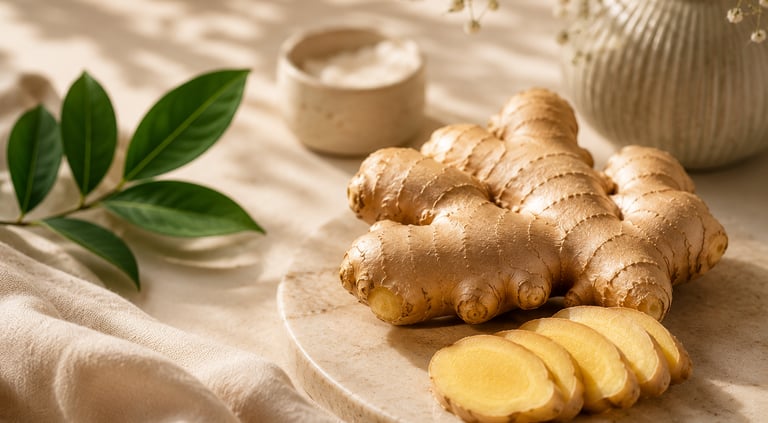
Period cramps affect millions of women every month, often disrupting work, sleep, exercise, and daily activities. While many women rely on over-the-counter pain relievers, there is growing interest in natural ingredients that may help support menstrual comfort.
One ingredient that has received significant scientific attention is ginger. Used for centuries in traditional wellness practices, ginger is now backed by a growing body of research exploring its potential role in managing menstrual discomfort.
What Causes Period Cramps?
Period cramps, medically known as primary dysmenorrhea, occur when the uterus contracts to shed its lining during menstruation.
These contractions are triggered by hormone-like compounds called prostaglandins. Higher prostaglandin levels can lead to:
Stronger uterine contractions
Increased inflammation
Reduced blood flow to uterine tissue
More intense menstrual pain
As a result, many approaches to menstrual comfort focus on reducing inflammation and supporting a healthy prostaglandin response.
Why Ginger May Help
Ginger (Zingiber officinale) contains naturally occurring bioactive compounds known as gingerols and shogaols.
Researchers believe these compounds may support menstrual comfort by:
Supporting a healthy inflammatory response
Influencing prostaglandin activity
Providing antioxidant support
Promoting overall wellness during the menstrual cycle
These properties have made ginger one of the most studied natural ingredients for period pain.
What Does the Research Show?
Several clinical studies and systematic reviews have investigated ginger's effects on menstrual discomfort.
A systematic review and meta-analysis published in Pain Medicine analyzed multiple randomized controlled trials and found that ginger supplementation significantly reduced menstrual pain severity compared with placebo. The researchers concluded that ginger may be an effective natural option for women experiencing primary dysmenorrhea.
Reference:
Daily JW, Zhang X, Kim DS, Park S. Efficacy of Ginger for Alleviating the Symptoms of Primary Dysmenorrhea: A Systematic Review and Meta-analysis. Pain Medicine. 2015.
https://pubmed.ncbi.nlm.nih.gov/26177393/
More recently, a 2024 meta-analysis reviewed available clinical evidence and reported that ginger effectively reduced pain associated with primary dysmenorrhea. The authors noted that ginger demonstrated effectiveness comparable to commonly used non-steroidal anti-inflammatory drugs (NSAIDs) in several studies.
Reference:
Ginger for Pain Management in Primary Dysmenorrhea: A Meta-analysis. 2024.
https://pubmed.ncbi.nlm.nih.gov/38770631/
In addition, a randomized clinical trial comparing ginger with ibuprofen and mefenamic acid found that ginger was similarly effective in reducing menstrual pain intensity when taken during the first few days of the menstrual cycle.
Reference:
Ozgoli G, Goli M, Moattar F. Comparison of Effects of Ginger, Mefenamic Acid, and Ibuprofen on Pain in Women with Primary Dysmenorrhea.
https://pubmed.ncbi.nlm.nih.gov/19216660/
While more research is always valuable, the current evidence suggests that ginger may support menstrual comfort through its anti-inflammatory and antioxidant properties.
Additional Benefits of Ginger
Beyond menstrual comfort, ginger may offer several additional wellness benefits:
Supports digestive comfort
May help reduce occasional nausea
Provides antioxidant support
Supports overall well-being during menstruation
These qualities have contributed to ginger's popularity in women's wellness formulations around the world.
Is Ginger Safe?
For most healthy adults, ginger is generally considered safe when consumed as part of a balanced diet or in appropriate supplement amounts.
Some individuals may occasionally experience:
Mild stomach discomfort
Heartburn
Digestive upset
If you are pregnant, taking blood-thinning medications, or managing a medical condition, consult your healthcare professional before using ginger supplements regularly.
The Bottom Line
Scientific research suggests that ginger may help reduce the severity of menstrual discomfort and support overall menstrual well-being. While it is not a cure for period pain, it remains one of the most extensively studied natural ingredients for women seeking a natural approach to menstrual comfort.
As interest in evidence-based wellness continues to grow, ginger stands out as a promising ingredient backed by both traditional use and modern scientific research.
Scientific References
https://pubmed.ncbi.nlm.nih.gov/38770631/
This article is intended for educational purposes only and should not be considered medical advice. Always consult a qualified healthcare professional regarding any health concerns.