
Period Cramps Every Month? Here's Why Magnesium Is Getting So Much Attention
6/30/20263 min read
If you've ever had to cancel plans, skip work, or curl up with a heating pad because of painful period cramps, you're not alone.
In fact, more than half of menstruating women experience menstrual pain, and for many, it's severe enough to disrupt daily life. While pain relief medications can be effective, more women are also exploring nutrition based approaches to support menstrual health. One mineral that keeps coming up in research? Magnesium.
But why is everyone talking about it, and can it really make a difference?
Why Do Period Cramps Hurt?
Period cramps, medically known as primary dysmenorrhea, are caused by natural hormone like compounds called prostaglandins.
During your period, prostaglandins help the uterus contract to shed its lining. However, when prostaglandin levels are high, these contractions become stronger and more frequent, temporarily reducing blood flow to the uterine muscles. This can lead to the familiar symptoms many women know all too well:
Lower abdominal cramping
Back pain
Nausea
Fatigue
Discomfort that can last for several days
While this process is normal, the intensity of the pain varies from person to person.
So, Why Is Magnesium Getting So Much Attention?
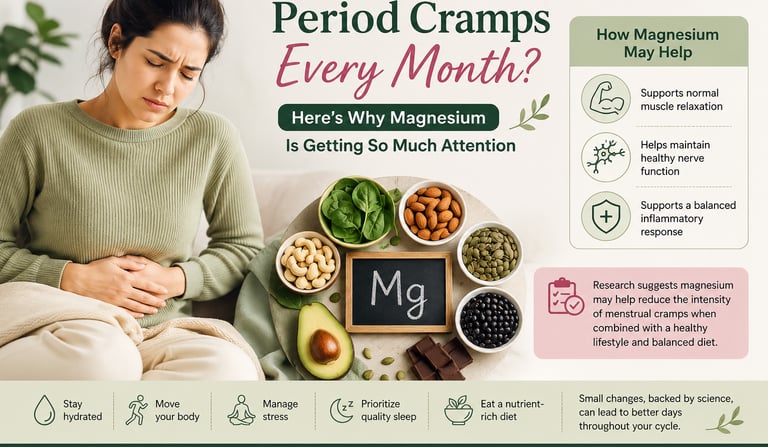
Magnesium is an essential mineral involved in over 300 biochemical processes in the body. It's known for supporting muscle and nerve function, energy production, and normal muscle relaxation.
Researchers believe magnesium may help support menstrual comfort in several ways:
It supports normal muscle relaxation, including the smooth muscles of the uterus.
It plays a role in regulating nerve signaling involved in pain perception.
It helps maintain a healthy inflammatory balance, which may influence menstrual discomfort.
Although researchers are still studying exactly how magnesium works in menstrual health, these biological roles have made it one of the most promising nutrients for women experiencing monthly cramps.
What Does the Science Say?
Several clinical studies have investigated magnesium for primary dysmenorrhea.
A 2020 systematic review and meta analysis found that magnesium supplementation showed potential in reducing menstrual pain compared with control groups. While the authors noted that more high quality studies are needed, the overall findings suggest magnesium may be a useful supportive strategy for some women.
Other reviews looking at lifestyle and nutritional approaches to menstrual pain have also highlighted magnesium as one of the nutrients with encouraging evidence.
The important point is this: Magnesium isn't a magic cure, and it shouldn't replace medical treatment when needed. But for many women, it may be one helpful piece of a broader menstrual wellness routine.
Can You Get Enough Magnesium from Food?
Absolutely.
Many everyday foods are naturally rich in magnesium, including:
Pumpkin seeds
Almonds
Cashews
Spinach
Black beans
Avocados
Whole grains
Dark chocolate (70% cocoa or higher)
Eating a balanced diet that includes these foods supports not only menstrual health but also muscle function, heart health, and overall well being.
What About Magnesium Supplements?
If your dietary intake is low, a healthcare professional may recommend a magnesium supplement. Forms such as magnesium glycinate and magnesium citrate are commonly used because they are generally absorbed well.
However, supplements aren't appropriate for everyone. If you have kidney disease, are pregnant, or take prescription medications, speak with your healthcare provider before starting any new supplement.
Small Lifestyle Changes Matter Too
While magnesium is attracting well deserved attention, it's most effective when combined with other healthy habits:
Stay hydrated throughout your cycle.
Aim for regular physical activity.
Prioritize quality sleep.
Manage stress through relaxation techniques or mindfulness.
Eat a nutrient rich, balanced diet.
Supporting your body consistently, not just during your period, can make a meaningful difference over time.
The Bottom Line
There's no single solution for period cramps, because every woman's body is different. However, growing scientific evidence suggests that magnesium may help support menstrual comfort by promoting healthy muscle function and a normal inflammatory balance.
If monthly cramps are affecting your quality of life, consider speaking with your healthcare provider about whether increasing your magnesium intake through food or supplements could be right for you.
At Belrevia, we believe menstrual wellness starts with understanding your body and making informed, evidence based choices. Small changes, backed by science, can lead to better days throughout your cycle.
Scientific References
1. The Effect of Micronutrients on Pain Management of Primary Dysmenorrhea: A Systematic Review and Meta analysis (2020)
https://pubmed.ncbi.nlm.nih.gov/32296659/
2. Free Full Text Article (PMC)
https://pmc.ncbi.nlm.nih.gov/articles/PMC7146731/
3. Self Care and Lifestyle Interventions for Primary Dysmenorrhea: A Systematic Review
https://bmccomplementmedtherapies.biomedcentral.com/articles/10.1186/s12906-019-2433-8